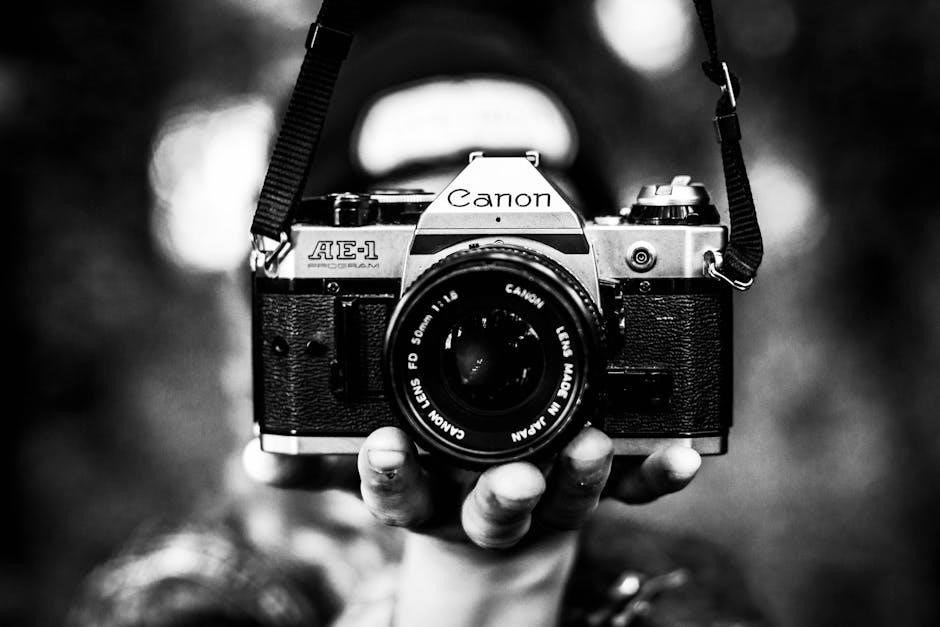
Canon AE-1 Manual Camera: A Comprehensive Guide
Canon AE-1’s detailed manual‚ spanning 76 pages‚ unlocks professional operation‚ offering specifications‚ instructions‚ and accessory details – a gateway to photographic exploration!
The Canon AE-1‚ released in 1976‚ represents a pivotal moment in photographic history‚ democratizing advanced features previously found only in professional equipment. This 35mm SLR quickly became a favorite among enthusiasts and professionals alike‚ lauded for its innovative Program AE mode‚ offering simplified operation without sacrificing creative control.
This guide serves as a comprehensive resource for understanding and utilizing the full potential of your Canon AE-1. Whether you’re a seasoned photographer or just beginning your journey‚ this manual will provide detailed instructions‚ troubleshooting tips‚ and valuable insights into the camera’s capabilities. Welcome to a new world of photographic possibilities!
Historical Context and Significance
The Canon AE-1’s 1976 debut revolutionized the camera market‚ introducing microprocessor control to a wider audience. Prior to its release‚ automatic exposure systems were often complex and expensive. Canon’s innovation made these features accessible‚ significantly impacting amateur and professional photography.
Its success stemmed from blending user-friendliness with robust build quality. The AE-1 wasn’t merely a technological advancement; it represented a shift in photographic philosophy‚ empowering photographers to focus on composition and creativity. The camera’s enduring popularity‚ even decades later‚ testifies to its lasting significance and influence on subsequent camera designs.
Understanding the Camera’s Features
Canon AE-1 boasts Program AE‚ Shutter Priority‚ and Manual modes‚ alongside a reliable focusing system – offering versatile control for diverse photographic scenarios and skill levels.
Program AE Mode Explained
Canon’s Program AE mode on the AE-1 simplifies exposure‚ automatically selecting both aperture and shutter speed based on light conditions. This intelligent system allows photographers to concentrate on composition and capturing the moment‚ ideal for beginners or fast-paced shooting. However‚ understanding its limitations is crucial. While convenient‚ Program AE offers less creative control compared to manual modes.
The camera evaluates the scene via its metering system‚ determining the optimal settings for a properly exposed image. Users can override the programmed exposure with exposure compensation‚ adjusting brightness as needed. This mode is particularly useful in consistent lighting‚ but may struggle with high-contrast scenes where the camera’s evaluation might be inaccurate. Mastering Program AE provides a solid foundation for exploring the AE-1’s full potential.
Shutter Priority Mode Operation
The Canon AE-1’s Shutter Priority mode empowers photographers to dictate the shutter speed‚ controlling motion blur and freezing action. The camera then automatically selects the appropriate aperture to achieve correct exposure. This is invaluable for sports photography‚ capturing waterfalls‚ or any scenario where controlling time is paramount.
To operate‚ set the dial to ‘Tv’ and choose your desired shutter speed. The viewfinder displays the calculated aperture. Remember‚ faster shutter speeds require wider apertures (lower f-numbers) and vice versa. Exposure compensation remains vital; adjust it if the camera’s metering doesn’t align with your artistic vision. Understanding the interplay between shutter speed and aperture is key to mastering this versatile mode on the AE-1.
Manual Exposure Mode Details
The Canon AE-1’s Manual mode grants complete creative control‚ allowing photographers to independently set both shutter speed and aperture. This mode is ideal for challenging lighting situations where automatic modes struggle‚ or when a specific depth of field and motion effect are desired. Switching to Manual involves setting the dial to ‘M’.
Utilize the viewfinder’s metering system as a guide‚ observing the needle’s position. Adjust shutter speed and aperture until the needle centers‚ indicating proper exposure. Remember to consider ISO settings for accurate readings. Manual mode demands practice and understanding of the exposure triangle‚ but unlocks unparalleled artistic freedom with your Canon AE-1.
Focusing System and Techniques
The Canon AE-1 employs a behind-the-lens (TTL) focusing screen with a microprism collar and a split-image rangefinder at the center. These aids assist in achieving sharp focus‚ particularly with manual lenses. Switching to Manual focus via the ‘CAMERA’ or ‘MEMORY’ mode activates the focus indicator in the viewfinder.
Rotate the focusing ring on the lens until the split-image aligns‚ or the microprism collar appears clear. Practice is key to mastering this technique. For moving subjects‚ pre-focus and track the subject within the viewfinder. Accurate focusing is crucial for image quality‚ and the Canon AE-1’s system‚ while manual‚ is remarkably effective.
Operating Instructions
Canon AE-1 operation involves film loading‚ exposure settings‚ self-timer use‚ and understanding the viewfinder display for optimal photographic control and results.
Loading Film into the Canon AE-1
Loading film into the Canon AE-1 is a straightforward process. First‚ locate the film chamber release on the camera’s bottom. Open the back cover using the release. Next‚ insert the 35mm film cassette into the film chamber’s left side. Ensure the film leader extends across the camera body to the take-up spool on the right.
Advance the film using the film advance lever‚ ensuring the film perforations engage with the sprockets. Check that the rewind knob turns as you advance the film‚ confirming proper loading. Close the camera back securely. Finally‚ continue advancing the film and using the shutter release until the frame counter reaches ‘1’‚ ready for your first shot. Proper loading ensures smooth operation and prevents film damage.
Setting the Exposure Compensation
Exposure compensation on the Canon AE-1 allows for adjustments to the camera’s automatic exposure settings. Located near the shutter speed dial‚ the +/- compensation dial modifies the light metering. Turning the dial towards the “+” symbol increases exposure‚ useful for dark subjects‚ while “-” decreases it for bright scenes.
This feature is crucial when the camera’s meter is fooled by unusual lighting conditions. Increments are typically in stops (e.g.‚ +1‚ -1)‚ each doubling or halving the light. Use it to fine-tune images‚ preventing over or underexposure. Remember to return the dial to ‘0’ after use for accurate automatic metering in subsequent shots.
Using the Self-Timer Function
The Canon AE-1’s self-timer enables delayed shutter release‚ perfect for group photos or when a tripod isn’t available. Activate it by moving the shutter speed dial to the ‘B’ setting‚ then pressing the self-timer button located near the shutter release. A lamp illuminates‚ indicating the timer is active.
The default delay is approximately 10 seconds‚ allowing time to compose yourself in the frame. Pressing the shutter release initiates the countdown. To cancel‚ simply turn the shutter speed dial away from ‘B’ or re-press the self-timer button. Ensure a stable surface for the camera to avoid blur during the exposure.
Understanding the Viewfinder Display
The Canon AE-1’s viewfinder provides crucial exposure information; Key indicators include the shutter speed‚ visible at the bottom‚ and a series of LEDs displaying exposure correction. These LEDs illuminate to signal over or underexposure in Program AE mode‚ guiding adjustments for optimal results.
A central spot indicates the focusing point. When using manual focus‚ observe the microprism collar surrounding this spot; when in focus‚ it appears clear. The viewfinder also displays battery check and film advance confirmation. Familiarizing yourself with these elements ensures accurate settings and sharp images.
Technical Specifications
Canon AE-1 supports various lenses‚ boasts a 2-1/1000 sec shutter speed‚ accepts ISO 25-2000 film‚ and operates on 4LR44 or similar batteries.
Lens Compatibility and Mount
The Canon AE-1 utilizes the Canon FD mount‚ a bayonet mount system renowned for its robust connection and compatibility with a wide array of Canon FD lenses. This mount allows for full aperture metering‚ a significant advantage for photographers seeking precise exposure control. Numerous FD lenses were produced‚ ranging from standard prime lenses to telephoto zooms‚ offering versatility for diverse photographic needs. Adapters are available‚ enabling the use of lenses from other manufacturers‚ though full functionality may be limited. The FD mount’s design ensures a secure and reliable connection‚ contributing to the camera’s overall performance and usability. Understanding the FD mount is crucial for maximizing the Canon AE-1’s potential and exploring the extensive lens options available.
Shutter Speed Range and Accuracy
The Canon AE-1 boasts a versatile shutter speed range‚ spanning from 2 seconds to 1/1000th of a second‚ providing flexibility for capturing various motion effects and lighting conditions. Additionally‚ it features a Bulb mode for long exposures. Accuracy is maintained through a mechanically controlled shutter‚ known for its reliability. While generally precise‚ periodic servicing ensures optimal performance. The camera’s shutter priority mode allows photographers to select the shutter speed‚ with the camera automatically determining the appropriate aperture. Understanding the shutter speed’s impact on exposure and motion blur is key to mastering the Canon AE-1’s capabilities.
ISO Range and Film Support
The Canon AE-1 readily supports a wide range of 35mm film‚ accommodating ISO speeds from 25 to 3200‚ offering versatility for diverse shooting scenarios and lighting conditions. This adaptability allows photographers to utilize various film stocks to achieve desired aesthetic qualities. The camera’s compatibility extends to both black and white‚ as well as color negative and slide films. Proper ISO setting on the camera is crucial for accurate exposure. Remember to match the camera’s ISO dial to the film’s speed for optimal results. The Canon AE-1’s film support ensures creative freedom.
Battery Information and Replacement
The Canon AE-1 utilizes a 4LR44 or equivalent 6V alkaline battery to power its electronic functions‚ including the light meter and electromagnetic shutter. Battery life varies depending on usage‚ but regular film shooters should anticipate replacements. When the viewfinder display indicates low battery‚ promptly replace it to avoid inaccurate readings or camera malfunction. Ensure correct polarity during installation. Proper battery storage‚ away from extreme temperatures and humidity‚ extends its lifespan. Using high-quality alkaline batteries is recommended for reliable performance. A depleted battery impacts the Canon AE-1’s core functionalities‚ so always keep a spare handy.
Troubleshooting Common Issues
Addressing exposure‚ focusing‚ and battery problems in your Canon AE-1‚ alongside film advance difficulties‚ ensures continued operation and photographic enjoyment.
Exposure Problems and Solutions
Exposure inaccuracies with the Canon AE-1 often stem from incorrect settings or battery issues. First‚ verify the shutter speed and aperture are appropriately configured for the lighting conditions. Utilize the exposure compensation dial to fine-tune brightness if needed.
If images consistently appear over or underexposed‚ check the battery; a weak battery can affect the camera’s metering system. Ensure the film ISO setting matches the film’s actual speed. For persistent problems‚ consult the service manual (available online at baytan.org) for detailed troubleshooting steps‚ potentially involving meter calibration. Remember proper film loading is also crucial for correct exposure.
Focusing Difficulties Addressed
Focusing issues on the Canon AE-1 frequently arise from incorrect focus mode selection or insufficient light. Switch to Manual Focus (indicated by a ‘9’ on the screen) for precise control‚ especially in challenging conditions. Rotate the focusing ring until the image appears sharpest in the viewfinder.
Ensure adequate lighting‚ as low light can hinder accurate focusing. Check the lens for cleanliness; smudges can affect clarity. If using autofocus‚ confirm it’s properly engaged and the subject falls within the focus area. Regularly inspect the lens mount for any looseness. Refer to online resources or the camera’s manual for detailed focusing techniques.
Battery Related Issues Resolved
Canon AE-1 relies on a 4LR44 or equivalent 6V battery. If the camera fails to power on‚ first verify correct battery installation‚ observing proper polarity. Weak batteries cause dim viewfinder displays or erratic operation. Replace the battery with a fresh one‚ ensuring it’s a reputable brand for consistent performance.
Avoid mixing old and new batteries. Store batteries correctly when not in use – cool‚ dry place. Corrosion within the battery compartment can disrupt contact; carefully clean with a cotton swab and isopropyl alcohol. If issues persist‚ check the battery contacts for damage or bending‚ and consider professional servicing.
Film Advance Problems Explained
Canon AE-1 film advance issues often stem from improper film loading. Ensure film is correctly threaded onto the take-up spool‚ and the spool is securely engaged. If the film isn’t advancing‚ check for obstructions within the film chamber. A jammed film can prevent smooth operation.
Sometimes‚ the film leader isn’t properly catching. Gently assist the initial advance. If the counter isn’t incrementing‚ the drive mechanism might be faulty‚ requiring professional attention. Avoid forcing the advance lever; this can cause damage. Regularly inspect the camera for dust or debris that could interfere with the mechanism.
Maintenance and Care
Canon AE-1 longevity relies on careful cleaning‚ proper lens storage‚ and maintaining battery health—essential practices for preserving this classic camera’s functionality.
Cleaning the Camera Body
Maintaining the Canon AE-1’s exterior involves gentle practices. Begin by using a soft‚ dry cloth to wipe away dust and fingerprints from the camera body. For stubborn smudges‚ slightly dampen the cloth with a mild lens cleaning solution – avoid harsh chemicals or abrasive materials. Pay particular attention to the film compartment and viewfinder window‚ ensuring they remain free of debris.
Avoid applying liquids directly onto the camera; always apply to the cloth first. Regularly inspect the battery compartment for corrosion and clean as needed. A clean camera body not only enhances its appearance but also protects its internal components‚ ensuring reliable performance for years to come. Remember‚ preventative care is key to preserving this iconic camera.
Lens Care and Storage
Proper Canon AE-1 lens care is crucial for image quality. Always use a blower to remove dust before attempting to wipe the glass. Employ lens cleaning tissue and a dedicated lens cleaning solution for fingerprints or stubborn marks‚ applying gentle circular motions. Avoid excessive pressure.
When storing lenses‚ ensure they are clean and dry. Utilize lens caps to protect the front element from dust and scratches. Store lenses in a cool‚ dry place‚ ideally within a padded lens case to prevent impact damage. Avoid prolonged exposure to direct sunlight or extreme temperatures. Regular cleaning and careful storage will maintain optimal lens performance and longevity.
Proper Battery Storage
For your Canon AE-1‚ correct battery storage is vital to prevent corrosion and ensure reliable operation. Remove batteries if the camera won’t be used for an extended period – weeks or months – to avoid potential leakage. Store batteries in a cool‚ dry place‚ away from direct sunlight and extreme temperatures.
Avoid storing batteries with metal objects‚ as this can cause short circuits. Consider using a plastic battery case or individual battery holders. Regularly check batteries for signs of corrosion. If corrosion is present‚ carefully clean the battery contacts with a cotton swab and isopropyl alcohol before reinstalling or disposing of the battery responsibly.

Resources and Further Information
Canon provides downloadable manuals and drivers‚ while online forums and ManualsBase offer community support and a wealth of AE-1 knowledge.
Canon AE-1 Manual Download Links
Accessing the Canon AE-1 manual is crucial for maximizing your photographic experience. Several online resources provide downloadable versions in PDF format. ManualsBase offers a readily available copy‚ ensuring you have quick access to operating instructions and technical details. Additionally‚ the Internet Archive hosts a digitized version of the Canon AE-1 Program manual‚ dated January 4‚ 2023‚ allowing for convenient online viewing or download. For service and repair information‚ a detailed service manual is available at baytan.org‚ offering in-depth technical guidance. These links provide comprehensive documentation to support your use and maintenance of this classic camera‚ empowering you to fully utilize its capabilities and preserve its functionality for years to come.
Online Communities and Forums
Engaging with online communities dedicated to the Canon AE-1 provides invaluable support and shared knowledge. Numerous forums and groups exist where enthusiasts discuss operation‚ troubleshooting‚ and modifications. These platforms offer a space to ask questions‚ share experiences‚ and learn from fellow photographers. Connecting with these communities can unlock solutions to common issues‚ provide insights into advanced techniques‚ and foster a deeper appreciation for this iconic camera. Active participation allows you to benefit from collective expertise‚ discover helpful resources‚ and contribute to the preservation of Canon AE-1 knowledge. Explore these digital spaces to enhance your photographic journey and connect with a passionate community.