Film writing delves into a captivating art form, requiring both keen observation and articulate expression. This short guide illuminates how to dissect and discuss cinematic works effectively.
Analyzing films isn’t merely summarizing plots; it’s uncovering hidden meanings and appreciating the director’s artistic choices;
Successful film analysis blends detailed observation with insightful interpretation, forming a compelling argument about the film’s significance.
Understanding the Scope of Film Analysis
Film analysis extends far beyond simple plot summaries or personal opinions; it’s a rigorous exploration of a film’s components and their combined effect. The scope encompasses examining technical elements – cinematography, editing, sound – alongside thematic concerns and narrative structures.
A comprehensive analysis considers how a film conveys meaning, not just what meaning it presents. This involves a “shot-by-shot analysis,” meticulously deconstructing scenes to understand directorial intent. Interpretation is key, revealing insights often unseen on initial viewing.
Furthermore, understanding the film’s historical and cultural context enriches analysis. Considering the director’s background and the film’s reception broadens perspective. Ultimately, film analysis aims to build a well-supported argument about the film’s artistic merit and significance.
The Importance of Objective Observation
Objective observation forms the bedrock of strong film analysis. While personal responses are natural, a compelling argument requires grounding in concrete evidence from the film itself. Avoid subjective statements like “this scene is sad” without demonstrating how the film evokes sadness – through lighting, music, or performance.

Focus on describing what you see and hear before interpreting its meaning. Detailed note-taking during viewings is crucial, documenting specific shots, dialogue, and sound cues. This meticulous approach allows for a more nuanced and defensible interpretation.
Maintaining academic objectivity means acknowledging alternative readings and avoiding generalizations. Support your claims with specific examples, demonstrating a thorough understanding of the film’s formal elements and their impact.

Pre-Writing: Film Selection and Viewing
Careful film selection and attentive viewing are vital first steps. Choose a film offering analytical depth, then watch actively, taking detailed notes for later use;
Choosing a Film for Analysis

Selecting the right film is paramount for a successful analysis. Opt for a movie that genuinely interests you, as sustained engagement is crucial. Consider films with readily apparent thematic depth or stylistic innovation – these offer richer material for exploration.
Avoid overly simplistic or mainstream blockbusters initially; complex narratives and directorial choices provide more substantial analytical opportunities. Think about accessibility to resources; can you easily re-watch scenes or find critical commentary? A film with existing scholarly discussion can be helpful, but don’t rely solely on others’ interpretations.
Ultimately, the best film for analysis is one that sparks your curiosity and allows you to formulate a unique and compelling argument. Don’t be afraid to choose a less-known film if it resonates with you!
Active Viewing Techniques: Note-Taking
Effective note-taking transforms passive watching into active analysis. Don’t just see the film; observe it meticulously. Jot down observations about mise-en-scène – set design, costumes, lighting – and how they contribute to the film’s mood and themes.
Record specific details regarding cinematography: camera angles, movements, and framing. Note significant moments in editing – cuts, transitions, and pacing. Pay close attention to the sound design, including dialogue, music, and sound effects.
Timestamp key scenes for easy reference. Don’t limit notes to technical aspects; also record your initial reactions, questions, and emerging ideas. These raw impressions can be invaluable when formulating your thesis. A detailed log allows for a robust shot-by-shot analysis later.
Core Elements of Film Analysis
Analyzing film requires examining key components: mise-en-scène, cinematography, editing, and sound design. These elements work together to construct meaning and narrative impact.
Shot-by-Shot Analysis: Deconstructing Scenes
Shot-by-shot analysis forms the bedrock of rigorous film study, demanding meticulous attention to detail. This process involves breaking down a scene into its individual shots, carefully noting camera angles, framing, movement, and composition.
Consider what is shown in each shot and, crucially, how it’s presented. Is the camera static or dynamic? What is the effect of a particular lens choice? How does editing – cuts, dissolves, fades – influence the rhythm and pacing of the scene?
Don’t simply describe; interpret. How do these technical choices contribute to the scene’s emotional impact or thematic resonance? This detailed deconstruction provides the evidence for broader interpretive arguments, linking form to meaning. It’s about understanding how the ‘how’ shapes the ‘what’.
Mise-en-Scène: Visual Elements and Their Meaning
Mise-en-scène, meaning “placing on stage,” encompasses all visual elements within the frame. Analyzing it requires examining set design, props, costumes, makeup, and lighting – how these elements contribute to the film’s overall aesthetic and narrative.
Consider the symbolism embedded within these choices. Does the color palette evoke specific emotions? Do costumes reflect character traits or social status? How does lighting create mood or highlight important details?
Effective analysis goes beyond simple description. Explore why the director made these choices. What effect are they trying to achieve? How does the mise-en-scène reinforce themes or character development? It’s a powerful tool for uncovering deeper layers of meaning within the film.
Cinematography: Camera Work and Visual Style
Cinematography, the art of visual storytelling through the camera, is crucial for film analysis. Examine camera angles (high, low, eye-level) and their psychological impact on the viewer. Consider camera movement – panning, tilting, tracking, zooming – and how it guides our attention.
Analyze shot types (long shot, medium shot, close-up) and their effect on intimacy and perspective. Pay attention to framing and composition; how are elements arranged within the shot? Explore the use of focus – deep focus, shallow focus – and its implications.
Discuss the overall visual style. Is it realistic, stylized, or expressionistic? How does the cinematography contribute to the film’s mood, tone, and narrative?
Editing: Rhythm, Pace, and Narrative Flow
Editing shapes the film’s rhythm and pace, profoundly impacting the narrative. Analyze the types of cuts used – continuity editing (seamless transitions), montage (creating meaning through juxtaposition), or jump cuts (disrupting flow).
Consider the length of shots; are they long and lingering, or short and rapid? How does this affect the viewer’s emotional response? Examine the use of transitions – fades, dissolves, wipes – and their symbolic significance.
Evaluate how editing contributes to the film’s overall structure and storytelling. Does it create suspense, build tension, or establish a particular mood? A well-edited film feels effortless, guiding the audience through the narrative with clarity and impact.
Sound Design: Music, Dialogue, and Effects
Sound design is crucial, extending beyond mere audibility. Analyze the interplay of dialogue, music, and sound effects – diegetic (originating within the film’s world) versus non-diegetic (added for effect).
How does the music enhance emotional impact or foreshadow events? Is the dialogue clear and purposeful, or ambiguous and symbolic? Consider the use of silence – what is communicated by its absence?
Examine sound effects: are they realistic or stylized? Do they create atmosphere, build tension, or emphasize specific actions? A masterful soundscape immerses the audience, enriching the viewing experience and contributing significantly to the film’s meaning.
Developing Your Argument
Crafting a strong thesis is vital; it’s your film analysis’s core claim. Support it with specific evidence from the film, demonstrating insightful interpretation.
Forming a Thesis Statement
A compelling thesis statement is the cornerstone of any successful film analysis. It’s more than a simple statement of fact; it presents a specific, arguable interpretation of the film. Think of it as your central claim – what you’re trying to prove about the movie.
Avoid broad generalizations. Instead, focus on a particular aspect of the film – a thematic element, a stylistic choice, or a narrative technique – and articulate how it contributes to the film’s overall meaning. A strong thesis will often hint at the evidence you’ll use to support your argument.
For example, instead of stating “Citizen Kane is a groundbreaking film,” try something like: “Through its innovative use of deep focus cinematography and non-linear narrative structure, Citizen Kane critiques the corrupting influence of wealth and power.” This thesis is specific, arguable, and suggests the analytical path you’ll take.
Supporting Your Claims with Evidence
A strong argument in film analysis isn’t built on opinion, but on concrete evidence from the film itself. Every claim you make must be meticulously supported with specific examples. This means detailed descriptions of shots, scenes, dialogue, and sound design.
Don’t just say a scene is suspenseful; show how the director creates suspense through camera angles, editing pace, and musical score. Refer to specific moments in the film – timestamps can be helpful – and analyze their significance.
Remember the principle of “form and interpretation.” First, analyze what the film is doing (the form – cinematography, editing, etc.), then explain why it’s doing it (the interpretation – how it contributes to the film’s meaning). Evidence transforms your interpretation from assertion into a persuasive argument.

Structuring Your Film Analysis Essay
A clear structure is vital. Begin with an introduction outlining context and your thesis. Develop detailed analysis in body paragraphs, and conclude by summarizing key insights.
The introduction sets the stage for your analysis, providing essential context about the film. Begin by introducing the film’s title, director, and release date – foundational elements for establishing its place within cinematic history. Briefly summarize the film’s premise, avoiding excessive plot detail; focus instead on establishing the core themes or issues it explores.
Crucially, the introduction culminates in a concise and arguable thesis statement. This statement should articulate your central argument about the film – what you intend to demonstrate through your analysis. A strong thesis doesn’t simply state a fact; it presents an interpretation that requires evidence and justification. For example, instead of stating “Citizen Kane is a groundbreaking film,” you might argue “Citizen Kane’s innovative use of cinematography profoundly shapes its exploration of memory and loss.”
This initial section should smoothly guide the reader towards your specific focus, preparing them for the detailed analysis that follows.
Body Paragraphs: Detailed Analysis
Body paragraphs form the core of your film analysis, meticulously supporting your thesis statement. Each paragraph should focus on a specific element of the film – a scene, a shot, a motif, or a technique – and demonstrate how it contributes to your overall argument.
Begin each paragraph with a clear topic sentence that directly relates to your thesis. Then, provide detailed evidence from the film, using specific examples and observations. Remember the importance of shot-by-shot analysis; describe what you see and hear, not just what happens.
Crucially, don’t simply present evidence; interpret it. Explain how the chosen element supports your claim, connecting it back to your central argument. Use film-specific terminology accurately and avoid generalizations. Strong body paragraphs demonstrate a deep understanding of the film’s form and its effect.
Summarizing Insights
The conclusion of your film analysis shouldn’t simply rehash your introduction. Instead, it should synthesize your arguments and offer a final, insightful perspective on the film.
Begin by briefly restating your thesis, but do so in a fresh and nuanced way, reflecting the depth of your analysis. Summarize the key evidence you presented, highlighting how it supports your central claim. Avoid introducing new information at this stage.
Consider the broader implications of your analysis. What does your interpretation reveal about the film’s artistic merit, cultural significance, or thematic concerns? A strong conclusion leaves the reader with a lasting impression and a deeper appreciation for the complexities of cinematic storytelling.

Writing Style and Tone
Maintain academic objectivity throughout your analysis, employing precise, film-specific terminology. Avoid subjective language and focus on evidence-based interpretations.
Maintaining Academic Objectivity
Objectivity is paramount in film analysis. Avoid personal opinions presented as fact; instead, ground your interpretations in concrete evidence from the film itself.
Employ a formal, scholarly tone, steering clear of colloquialisms or overly emotive language. Focus on what the film demonstrates, not simply how you feel about it.
Support every claim with specific examples – a particular shot, a line of dialogue, a musical cue – and explain how these elements contribute to your argument.
Acknowledge alternative interpretations, demonstrating a nuanced understanding of the film’s complexities. Present your analysis as a well-reasoned argument, not a subjective preference.
Remember, the goal is to illuminate the film’s artistry and meaning through rigorous, objective examination, fostering insightful discussion.
Using Film-Specific Terminology
Precise language is crucial for effective film analysis. Familiarize yourself with terminology relating to mise-en-scène, cinematography, editing, and sound design.
Instead of saying a shot “looks cool,” specify if it’s a “long take,” a “Dutch angle,” or utilizes “deep focus.” Describe editing techniques as “jump cuts,” “dissolves,” or “montage.”
Understand terms like “diegetic” and “non-diegetic” sound, and differentiate between “motivated” and “arbitrary” camera movements. Using these terms demonstrates a sophisticated understanding.
Avoid vague descriptions; be specific about framing, composition, and camera angles. A strong vocabulary enhances clarity and credibility.
Consult film studies resources to expand your lexicon and ensure accurate application of terminology, elevating the quality of your writing.
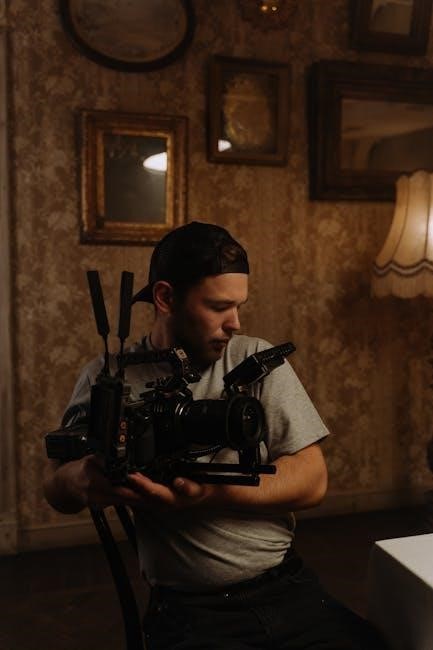
Resources for Film Study
Explore film databases and archives for research materials. Further reading in film theory provides critical perspectives, enriching your analytical skills and understanding.
Utilizing Film Databases and Archives
Accessing comprehensive film databases is crucial for in-depth analysis. The American Film Institute (AFI) Catalog offers detailed filmographies, while IMDb (Internet Movie Database) provides extensive cast, crew, and production information.
University libraries often house specialized film journals and books, offering critical perspectives. Archival research, including studio collections and historical documents, can reveal valuable context about a film’s creation and reception.
Online archives like the Library of Congress’s Motion Picture, Broadcasting and Recorded Sound Division provide access to rare footage and materials. Utilizing these resources strengthens your arguments and demonstrates thorough research, elevating the quality of your film analysis.
Remember to properly cite all sources consulted, adhering to academic standards for credibility.

Further Reading on Film Theory
Expanding your theoretical understanding enriches your film analysis. Explore foundational texts like Sergei Eisenstein’s “Film Form” and André Bazin’s “What is Cinema?” for insights into montage and realism.
Feminist film theory, pioneered by Laura Mulvey, offers critical perspectives on representation and the male gaze. Consider works by scholars like David Bordwell and Kristin Thompson for comprehensive analyses of film form and narrative.
Psychoanalytic film theory, influenced by Sigmund Freud, examines the psychological underpinnings of cinematic storytelling. Delving into these theories provides frameworks for interpreting films beyond surface-level observations, allowing for nuanced and sophisticated arguments.
Engaging with diverse theoretical approaches broadens your analytical toolkit and strengthens your critical thinking skills.